
Advice · From the Toolbox
Is Dry Mode Bad for Your Aircon in the Tropics? What 15 Years of Opening Them Up Has Taught Me
Dry mode isn't the villain. Running it for hours in FNQ humidity is. Here's what's actually happening inside the head unit — and the drying setting most people don't know they have.
It's sticky. The temperature isn't that bad but the air feels heavy, so you grab the remote and flick it over to dry mode. Feels like the gentler, smarter option — you're not smashing the room with cold air, you're just taking the edge off the humidity. Reasonable assumption.
The catch is that up here in Far North Queensland, dry mode doesn't behave the way most people assume it does. After 15 years of pulling these units apart on the Cassowary Coast, I can tell you what's actually going on behind that plastic cover — and why the way you run your aircon in Mission Beach isn't the same as running one in Melbourne.
What Does Dry Mode Actually Do?
Dry mode isn't a separate dehumidifier hiding inside your split. It's the same cooling cycle you already know, just wound back. The unit keeps the coil cold, but drops the indoor fan right down to its slowest speed.
Because the air is moving so slowly, each parcel of air spends longer in contact with the cold coil. More moisture condenses out onto the fins, drips into the drain tray and runs out the drain line. That's how it "dries" the room.
So here's the part people miss: dry mode means more water passing through the head unit, not less. The moisture goes somewhere useful (out the drain), but the coil itself stays wet the entire time the unit is running.
Why Does That Matter More in the Tropics?
Down south, the outside air is fairly dry, so dry mode has an easy job. In Innisfail, Tully, Mission Beach and Cardwell, the air outside is already close to saturation for months on end. The unit is fighting a losing battle — it can pull water out all day and more just keeps arriving.
Run dry mode for hours in that kind of humidity and you've got maximum condensation on a barely-moving coil, sitting in a dark enclosed plastic housing, for hours at a time. When I open a unit up six months later, that's the environment that grows mould. Every time.
If you want to see what that build-up actually looks like inside, have a read of Mould in Your Aircon: What FNQ Homeowners Need to Know.
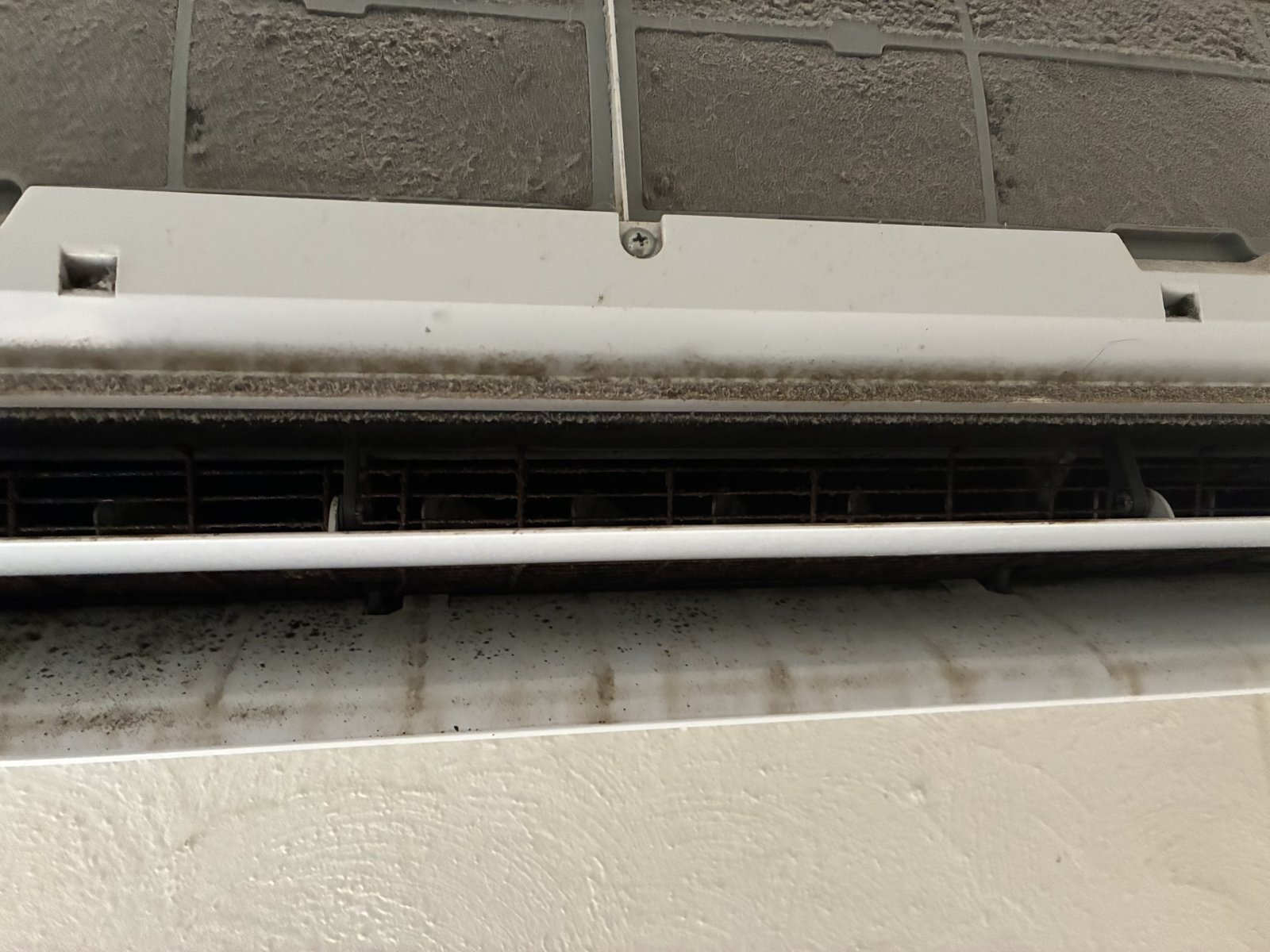 Before
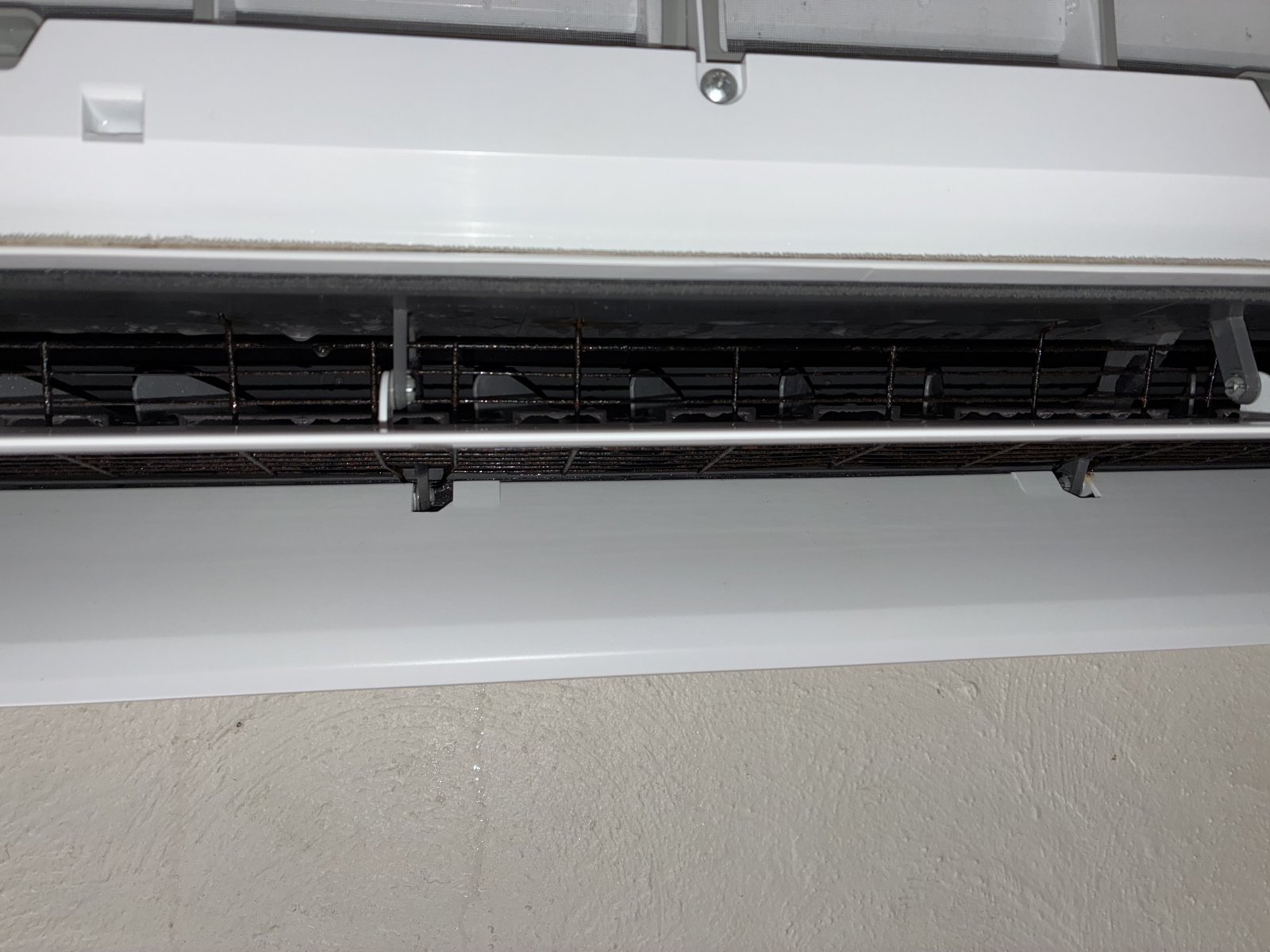 After
AfterSo is dry mode bad? Not exactly
Let me be fair about this. A short burst of dry mode at the end of the day is genuinely useful. The airflow, even at low speed, moves over the coil and helps carry the last of the moisture away before the unit shuts down for the night. That's a good thing.
The trouble is running it for hours on end in high humidity as your default cooling setting. Same story with fan-only mode: a short run helps dry things out, but leaving the fan going all night in a humid room can re-evaporate the water sitting in the drain pan and keep everything damp inside. You end up working against yourself.
Does Your Aircon Have a Built-In Drying Function?
This is the bit worth knowing. The real fix isn't which mode you cool in — it's what happens to the coil after you switch the unit off. If the coil dries out, mould struggles. If it stays wet overnight, mould has a party.
Manufacturers know this. Most of them build a drying cycle into the unit. But they don't all handle it the same way.
Toshiba
Does it automatically. Switch a Toshiba off and the indoor fan keeps running by itself for a few minutes to dry the coil out. There's nothing for the owner to turn on and nothing to remember.
It's a factory feature doing the job every single time, and it shows when you open one up years later — noticeably less build-up than the same-age unit sitting next to it from another brand. It's one of the reasons we rate them for our climate, and it's part of why we lean on Toshiba on our split system packages.
Most other modern brands
The feature is in there. It's just switched off from the factory and buried in the remote settings. Different brands call it different things — X-Fan, Blow, Clean, Self Clean, or Dry Anti-Mould.
Whatever it's called on your remote, it does the same job: runs the fan on for a few minutes after shutdown to dry the coil. It costs nothing to run. We check for it and switch it on for every unit we service.
Older or budget units
Often don't have it at all. In that case, just run the unit on fan-only for 10 to 15 minutes before you switch it off for the night. Same job, done by hand. Set a habit around it and it becomes second nature.
Not sure if your unit has the drying setting? We'll switch it on when we service it
Book online in under a minute, or give your local ARC-licensed team a call.
What Do I Actually Recommend?
- Use cool mode as your default, not dry mode
- Don't set it colder than about 23°C — overcooling just creates far more condensate
- Run a higher fan speed during the day rather than the lowest
- If you want dry mode, keep it to 20 to 40 minutes at the end of the day rather than running it for hours
- Check whether your unit has a drying function (X-Fan, Blow, Clean, Self Clean, Dry Anti-Mould) and turn it on if it does
- Wash your filters every 2 to 4 weeks
- Get a professional hydro-clean every 6 to 12 months in our climate
If you're already noticing a musty smell when the unit kicks in, that's a separate issue worth reading up on — why your aircon smells musty and how to fix it walks through what's actually causing it.
Will These Habits Remove Mould That's Already There?
These habits slow mould build-up down. They don't remove what's already in there. Once mould has taken hold on the coil and the barrel fan, no setting on the remote will shift it. That needs the cover off, the fan out, and a proper chemical hydro-clean.
If your unit hasn't had a professional clean in the last 12 months and you're in the Cassowary Coast, it's probably time. Have a look at what's included on our aircon cleaning services page, or book us in and we'll sort it in one visit.
Frequently Asked Questions
Should I use dry mode or cool mode in a humid climate?
Cool mode is the better default up here. It cycles the fan properly and pulls moisture out as a side effect of cooling. Dry mode slows the fan right down and keeps the coil wet for the whole run — fine for a short burst, rough on the unit if you run it for hours.
Does dry mode cause mould in air conditioners?
Not directly, but running it for long periods in a humid climate creates the exact conditions mould loves — a wet coil in a dark plastic housing with barely any airflow. Short bursts are fine. Hours at a time isn't.
What is the X-Fan or anti-mould setting on my air conditioner?
It's a feature that keeps the indoor fan running for a few minutes after you switch the unit off, so the coil dries out instead of sitting wet overnight. Different brands call it X-Fan, Blow, Clean, Self Clean or Dry Anti-Mould. On most brands it's switched off by default and hidden in the remote settings.
Do Toshiba air conditioners dry themselves out automatically?
Yes. Toshiba splits run the indoor fan on for a short cycle after shutdown by default, drying the coil without the owner needing to change anything. It's one of the reasons we rate them for our climate.
Is it bad to leave the fan running all night?
A short fan-only run of 10 to 15 minutes after cooling helps dry the coil out. Leaving fan-only mode going all night in a humid room can re-evaporate water sitting in the drain pan and keep the whole unit damp, which works against you.
What temperature should I set my aircon to in Far North Queensland?
Around 23 to 25°C is the sweet spot. Colder than 23°C and the coil works harder, produces far more condensate, and the room doesn't actually feel more comfortable — just wetter inside the head unit.
Book a hydro-clean and we'll switch the drying setting on while we're there
Book online in under a minute, or give your local ARC-licensed team a call.
ARC Licensed – Lic. L194280