The three problems we get called out for most in the Cassowary Coast — and what a proper clean actually fixes before you spend money on a repair or replacement.
Can I book more than one standard split unit?+
$159.50 for the first split system, then $148.50 for each additional unit cleaned at the same property and visit. All prices include GST. Regional travel fees may apply once per visit. No card surcharge. Same-property, same-visit cleaning totals: 2 units = $308.00 incl. GST; 3 units = $456.50 incl. GST; 4 units = $605.00 incl. GST. Any applicable travel fee is added once per visit.
Do regional travel fees apply?+
Regional travel is based on one-way driving time from our Mission Beach base and applies to all areas. Travel bands (incl. GST): 0–15 minutes — included ($0); over 15–30 minutes — $13.75; over 30–45 minutes — $24.75; over 45–75 minutes — $38.50. Trips over 75 minutes or travel that cannot be reliably determined are quoted or confirmed before booking. Your exact travel amount is shown before you complete an online booking. Travel is charged once per visit. No card surcharge.
Is an Aircon Fault / Diagnostic Visit a clean?+
No. The visit is $121.00 incl. GST, not a cleaning service. On-site diagnostic visit for an air conditioner that isn't working properly, is leaking, noisy, not cooling, or needs fault assessment. Repairs and parts are quoted separately. Regional travel fees may apply.
How do I know if there's mould in my air conditioner?+
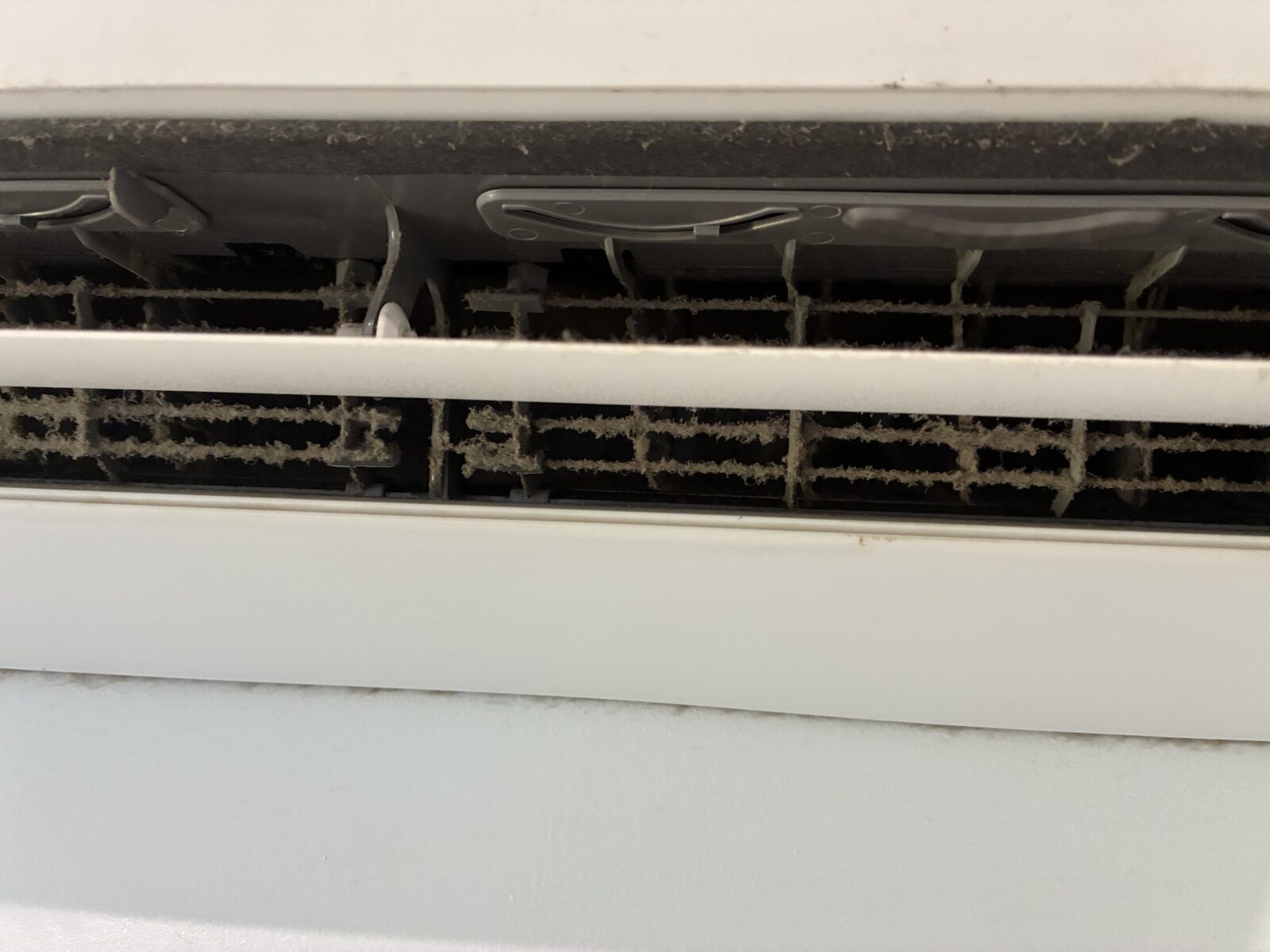
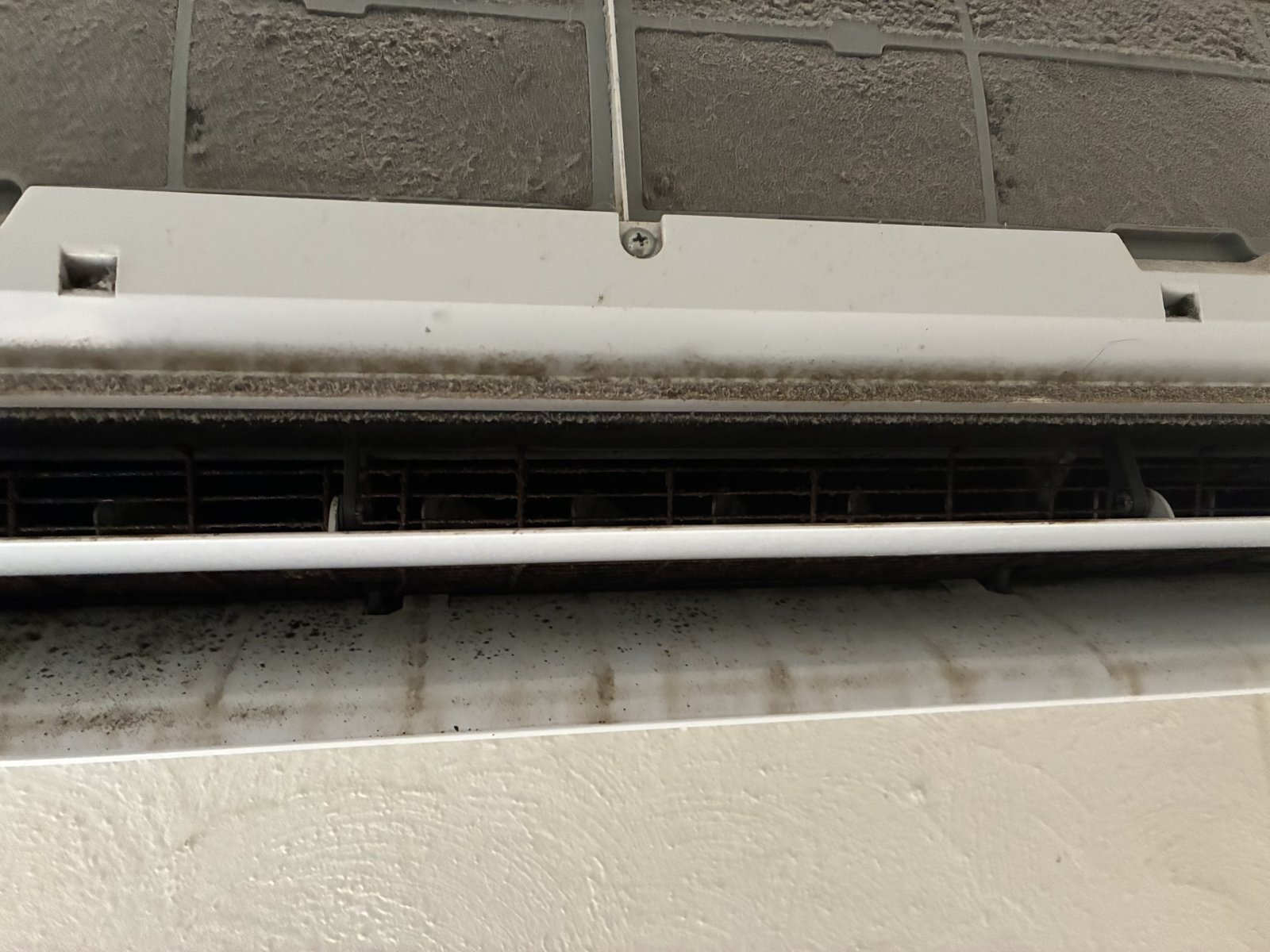
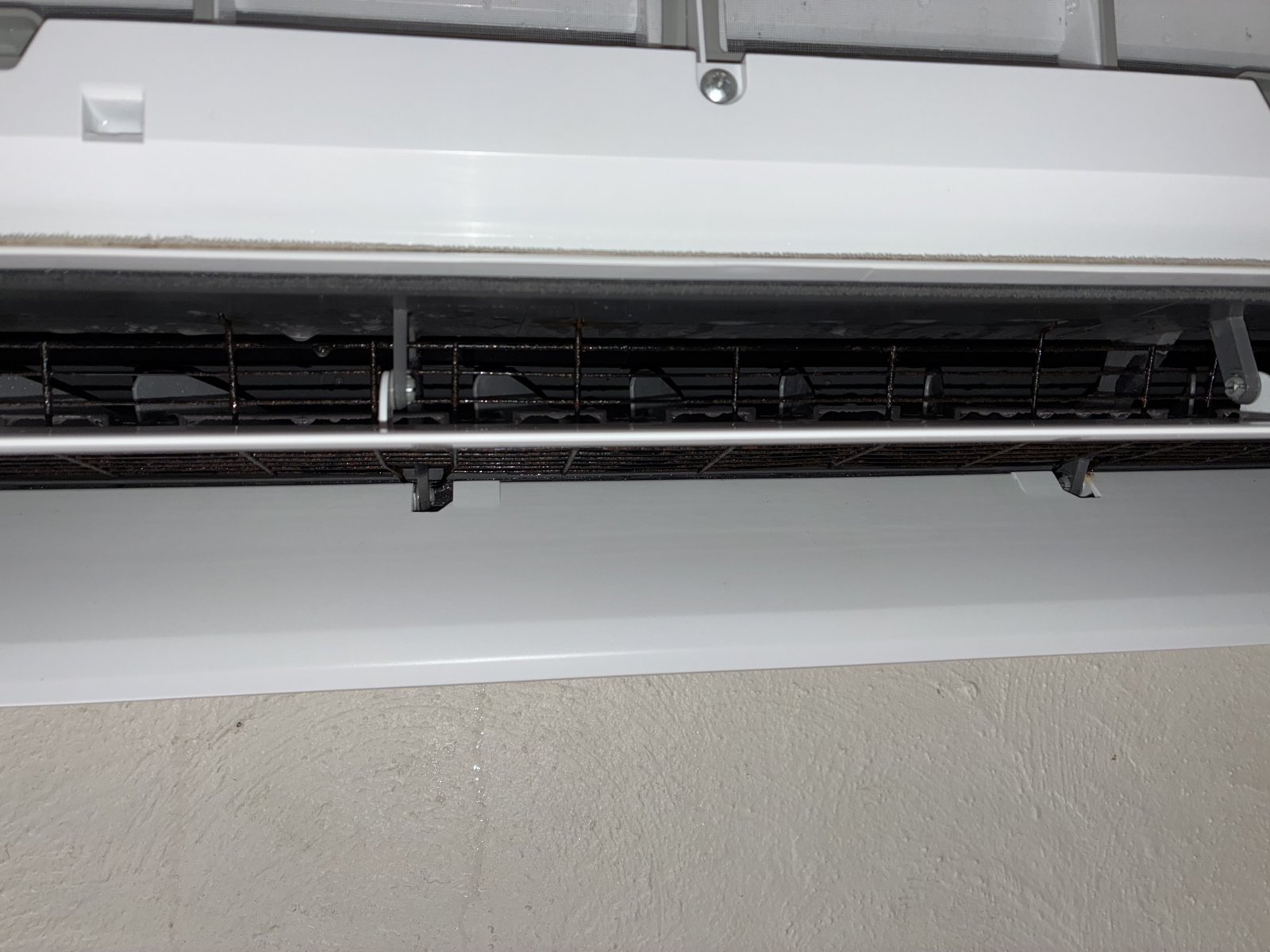
The telltale signs in a FNQ home are a musty or earthy smell when the unit first starts, dark speckling on the plastic louvres or fan barrel, black flecks blowing out onto surfaces below the unit, and a runny nose or itchy eyes that clear up when you leave the room. In our climate — high humidity, monsoon rain, warm nights — mould thrives on the wet coil and fan barrel between runs. A torch and a mirror aimed up under the front cover usually shows it before you smell it.
How do you remove mould from an air conditioner properly?+
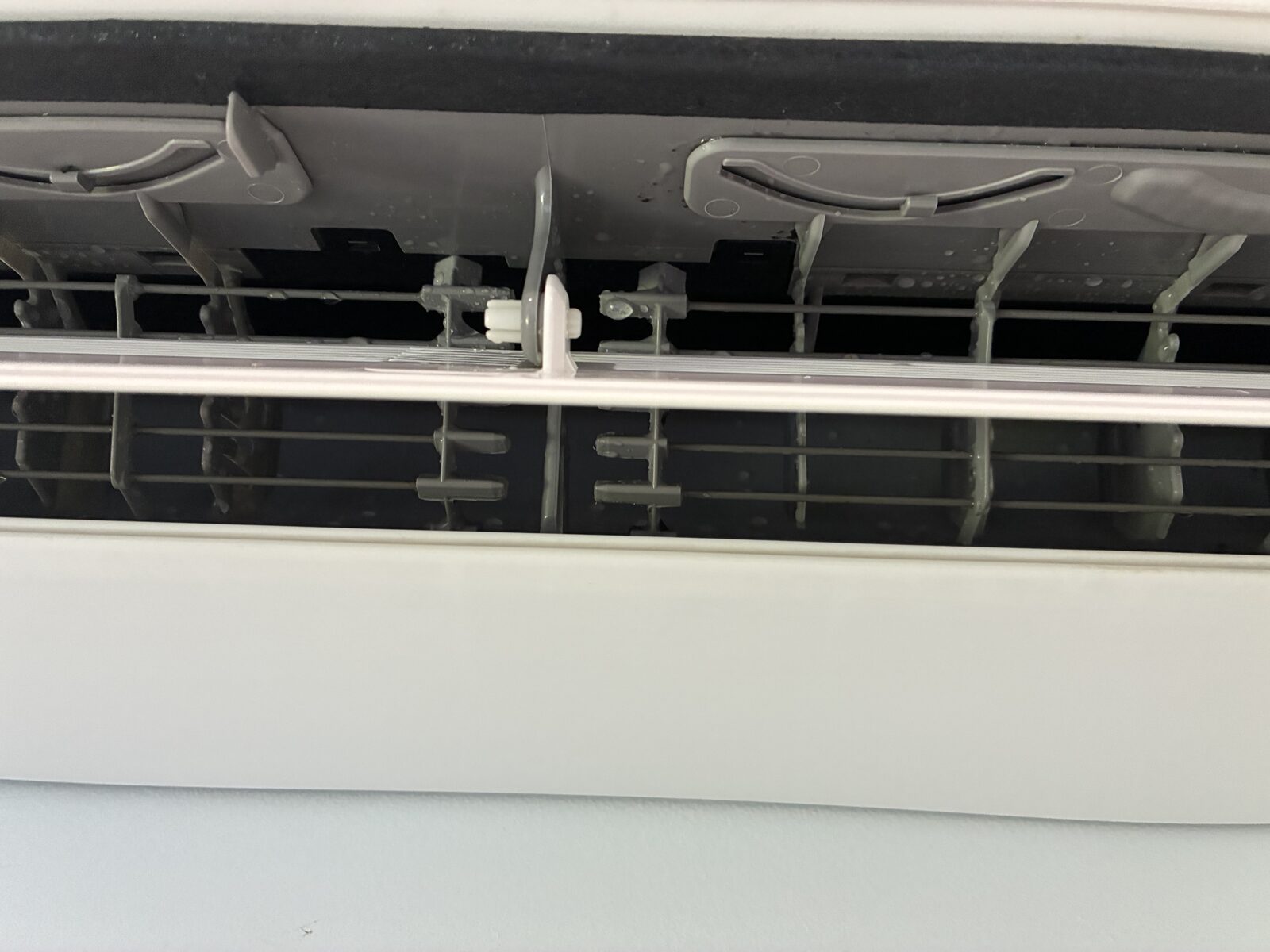
A proper mould treatment isn't a spray can from Bunnings. We drop covers, take the front cover and filters off, hydro-flush the evaporator coil and fan barrel under pressure to remove built-up residue, then apply a professional antimicrobial treatment. Drains get cleared so condensate can flow properly. On heavily affected units we quote a full strip-clean. A filter wipe does not reach deeper into the coil fins and fan barrel.
Why does my air conditioner smell musty, wet or sour?+
A musty smell can indicate microbial growth on a damp indoor coil. A hydro-clean and antimicrobial treatment cleans the coil and fan barrel where odours commonly develop. Deodorisers may mask the smell without cleaning those components.
My air conditioner smells like vinegar or wet socks — is that dangerous?+
Vinegar, sour or damp smells can indicate build-up on the coil or fan barrel. A full clean addresses those components. If the smell returns, we can inspect for a blocked drain or a coil that needs a more detailed strip-clean. If you have health concerns, seek advice from a qualified health professional.
My air conditioner is running but not cooling — can a clean fix it?+
Very often, yes. In FNQ we see aircons labelled 'broken' that are simply choked with dust, mould and salt on the coil and outdoor condenser — airflow drops, heat can't transfer, the unit runs constantly but the room never cools. A full clean restores 90%+ of lost performance in most cases. If cooling is still weak after a proper clean, the next likely causes are low refrigerant (a leak, not a top-up problem), a failing capacitor or fan motor, or an undersized unit for the room. We diagnose and quote before doing any paid repair.
Air conditioner not cooling after the wet season — what's going on?+
Classic Cassowary Coast pattern. Months of high humidity plus cyclone dust plus salt spray coat the outdoor condenser coil and clog the indoor filter and fan barrel. The unit still turns on, still blows air, but airflow and heat rejection have collapsed. A post-wet-season clean of both the indoor head and the outdoor condenser almost always brings cooling back — and it's a fraction of the cost of a repair or replacement.